

C-Series: Meaning-System Governance
The C-Series examines how interpretation is produced, maintained, and contested at scale. These works focus on environments where shared understanding cannot rely on proximity, direct interaction, or informal correction.
The monographs in this series study how authority, credibility, and agreement function when interpretation is mediated by institutions, technologies, or mass participation, and why familiar governance mechanisms often struggle in these conditions.
Governance Monographs
C1 · Artificial Intelligence in Meaning Systems
What changes when machines participate in interpretation.
C2 · Science as a Meaning System
What keeps knowledge reliable over time.
C3 · Pop Culture as Distributed Meaning Systems
How stories shape understanding at mass scale.

El Lissitzky, Proun 19D, 1922.
© Artists Rights Society (ARS), New York.
Featured with Artificial Intelligence in Meaning Systems as governance under rotation: multiple frames coexist, and interpretation shifts as the system exceeds any single viewpoint.
Monograph C1
Artificial Intelligence in Meaning Systems
November 2025
This paper explains why AI creates mistrust even when outputs look correct. It shows how machine mediation changes judgment and accountability, not just results. Read this if technical fixes don’t explain the confusion, hesitation, or conflict you’re seeing around AI.
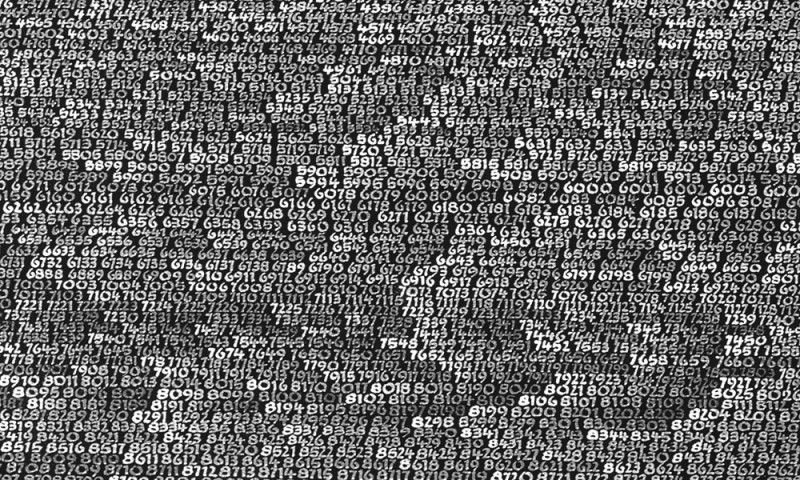
Roman Opałka, 1965/1–∞, 1965.
© Roman Opałka Estate. Courtesy of Aphelis.
Featured with Science as a Meaning System as continuity under rule: accumulation becomes credible through consistency, persistence, and an unbroken reference across time.
Monograph C2
Science as a Meaning System
December 2025
This paper explains how scientific conclusions remain usable across time, teams, and disciplines. It shows what fails when speed, volume, and specialization increase faster than correction can keep up. Read this if research advances but agreement weakens.

Pipilotti Rist, Pixel Forest Transformer, 2016.
© Pipilotti Rist. Courtesy of the artist and Hauser & Wirth.
Featured with Pop Culture as Distributed Meaning Systems as distributed interpretation: countless signals cohere through attention, repetition, and affect without centralized control.
Monograph C3
Pop Culture as Distributed Meaning Systems
December 2025
This paper explains why mass audiences argue so intensely about stories, canon, and creators. It shows what happens when interpretation spreads without shared authority or shared closure. Read this if the same conflict patterns repeat across fandoms and platforms.