The TMI Essential Reading List

A curated selection of works that shaped Meaning System Science and its development as the General Theory of Interpretation.

Featured Spotlight:

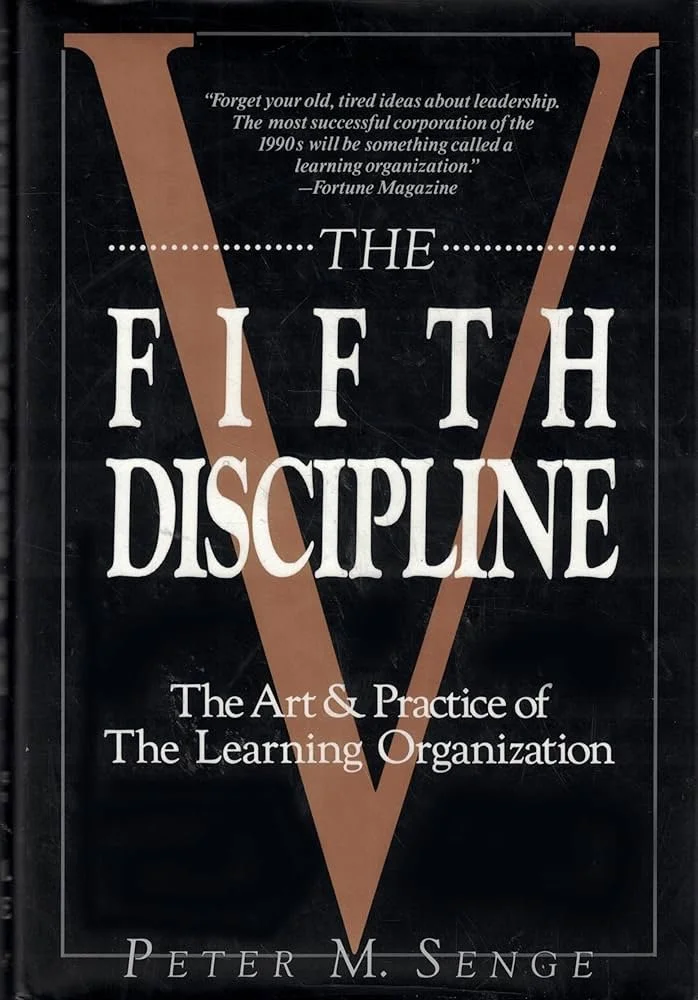
Peter Senge

The Fifth Discipline (1990)

Senge’s classic shows why organizations succeed when they can see themselves clearly as systems shaped by structure, learning, and shared understanding. It is one of the most practical and influential guides to modern organizational life, and an ideal entry point for readers who want to understand how meaning and coordination shape real performance. This book offers the perfect foundation before exploring the seminal works that follow.

Central Works

  • The Semantic Conception of Truth

    Alfred Tarski (1944)

    Tarski established truth as a formal, verifiable relation, creating the scientific foundation for Truth Fidelity (T) in Meaning System Science. His work anchors meaning in structural accuracy rather than belief or intention.

  • Under Cybernetics

    Norbert Wiener (1948)

    Wiener’s theory of cybernetics revealed how feedback, signaling, and structural pathways regulate system behavior. His insights form the basis of Signal Alignment (P) and Structural Coherence (C) in MSS.

  • Under The End of Certainty

    Ilya Prigogine (1997)

    Prigogine’s work on complexity and irreversibility explains why systems destabilize under sustained load. His thermodynamic framework informs the MSS concept of Drift (D) and the dynamics behind systemic reorganization.

  • How Emotions Are Made

    Lisa Feldman Barrett (2017)

    Barrett’s theory of constructed emotion reframed affect as a primary driver of interpretation. Her work established that regulatory capacity shapes what information can be understood under varying conditions. This insight forms the basis of Affective Regulation (A) in Meaning System Science.

(T)

  • On Sense and Reference

    Gottlob Frege (1892)

    Frege distinguished between the sense of an expression and its reference, showing that meaning involves both conceptual framing and real-world grounding. This insight explains why two statements can refer to the same fact while producing different interpretations. Meaning System Science builds on Frege’s structure to show how clarity, accuracy, and interpretive stability depend on the design of a system’s semantic architecture.

  • Truth and Meaning

    Donald Davidson (1967)

    Davidson extended the semantic tradition by linking truth conditions to interpretive practice. He argued that understanding meaning requires knowing what would make a statement true, establishing a functional bridge between structure and use. MSS draws from this lineage to explain how truth operates inside real systems — not as an abstraction, but as a condition for accurate action, alignment, and systemic stability.

(P)

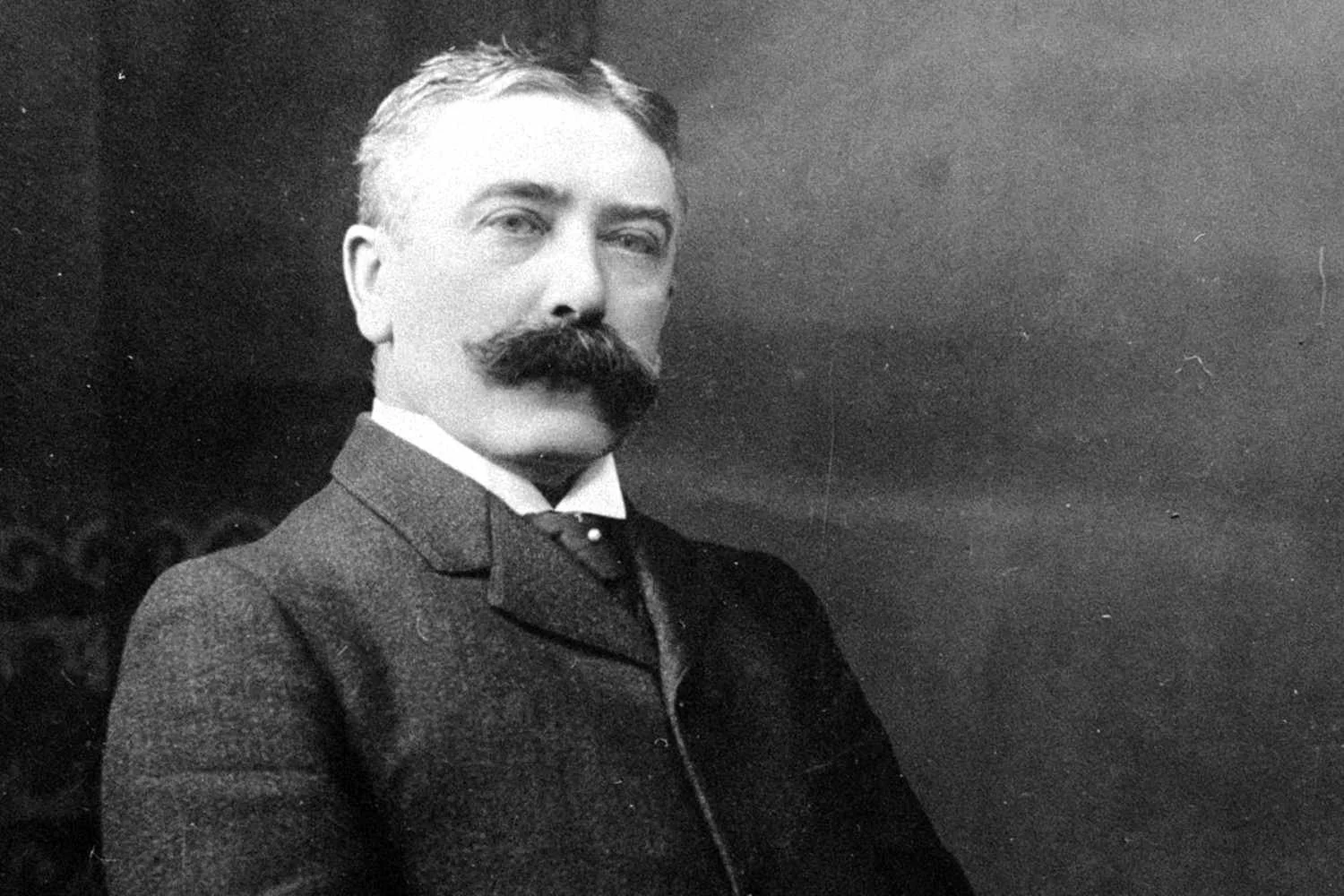
  • Course in General Linguistics

    Ferdinand de Saussure (1916)

    Saussure established the idea that meaning is created through structured relationships between signs, not through the signs themselves. His distinction between signifier and signified explains why signals can drift, distort, or misrepresent what they stand for. Meaning System Science builds on this insight to show how alignment breaks when the relationship between information and communication becomes unstable.

  • Collected Papers on Semiosis (Selections)

    Charles Sanders Peirce (1931–1958)

    Peirce’s triadic model of signs—object, sign, and interpretant—reveals that signals do not simply deliver information but trigger interpretations that shape action. His framework explains why systems must maintain consistent signal pathways to prevent misalignment between what is said, what is meant, and what is done. MSS draws on Peirce to articulate the structural behavior of Signal Alignment (P) inside complex environments.

(C)

  • General System Theory

    Ludwig von Bertalanffy (1968)

    Bertalanffy introduced the modern science of systems, showing that structure determines behavior and that parts of a system cannot be understood in isolation. His work provides the foundation for understanding coherence as an emergent property of interdependent components. MSS draws from this lineage to explain how structural clarity supports stability and coordinated action.

  • Sensemaking in Organizations

    Karl Weick (1995)

    Weick demonstrated that organizational structures shape how people interpret situations, absorb uncertainty, and decide what actions make sense. His work shows that coherence is not merely formal—it is lived, enacted, and constantly reconstructed. MSS builds on this insight to frame Structural Coherence (C) as both architectural and interpretive, grounded in how systems guide and constrain meaning.

(D)

  • A Mathematical Theory of Communication

    Claude Shannon (1948)

    Shannon’s work introduced the concept of informational entropy, showing how noise, distortion, and degraded signals reduce a system’s ability to transmit meaning reliably. His theory explains why systems must actively regulate distortion to maintain clarity. MSS builds on Shannon to describe Drift as the rate at which unresolved misalignment accumulates under real conditions.

  • Order Out of Chaos

    Ilya Prigogine & Isabelle Stengers (1984)

    Prigogine and Stengers explored how systems reorganize under stress, showing that instability arises naturally when energy, load, or contradiction exceed regulatory capacity. Their work illuminates why Drift accelerates and why systems transform when pushed beyond equilibrium. MSS uses this thermodynamic lineage to explain instability thresholds and the structural cost of unresolved contradiction.

(A)

  • The Process Model of Emotion Regulation

    James J. Gross (1998)

    Gross established the first comprehensive scientific framework for how emotional regulation shapes attention, interpretation, and behavioral response. His process model demonstrated that regulatory capacity directly affects what information can be absorbed and how quickly systems can correct early inconsistencies. MSS builds on Gross’s work by treating affective regulation (A) as the bandwidth that determines whether meaning stabilizes or contributes to Drift under load.

  • Descartes’ Error

    Antonio Damasio (1994)

    Damasio demonstrated that emotion is essential to rational decision-making, not separate from it. His work reveals that the capacity to regulate affect determines how systems handle complexity, conflict, and ambiguity. MSS draws from this lineage to frame Affective Regulation (A) as a core structural variable that supports stability during change.

Extended Lineage

Two thinkers whose ideas inform the developmental and moral foundations behind Meaning System Science.

Robert Kegan

In Over Our Heads (1994)

Kegan’s thesis, that modern demands often exceed our meaning-making capacity, helped inform the stance of Proportionism, highlighting why proportional understanding depends on how people organize and hold complexity.

Immanuel Kant

Groundwork of the Metaphysics of Morals (1785)

Kant’s thesis, that moral action must be consistent across all conditions, helped inform the First Law of Moral Proportion, emphasizing legitimacy as a structural requirement, not a preference.

The TMI Research Library

These readings offer context. The Research Library offers the science itself.

View the Research Libary