

General Theory of Interpretation
Every serious disagreement follows a pattern.
Two people can look at the same facts and reach different conclusions.
Two teams can review the same report and propose incompatible actions.
Two institutions can share data and still accuse each other of distortion.
At first, this looks like opinion, but if the disagreement continues, something else becomes visible.
It is not just that people disagree.
It is that they are operating under different standards for what things count as.
What counts as evidence.
What counts as authority.
What counts as final.
What counts as requiring action.
Those differences are not random, they follow structures.
Interpretation is not chaos
It is common to think interpretation is unpredictable or purely personal. But the moment interpretation shapes what happens next, it stops being arbitrary.
When a team treats one reading of events as decisive, alternatives become costly.
When a court issues a ruling, future cases must respond to it.
When leadership defines a situation in a certain way, behavior changes.
Something has moved from possibility into consequence.
When that shift occurs, the same features appear every time:
There is a defined environment where the interpretation applies.
There are standards treated as relevant.
There is a moment when hesitation ends and action begins.
There are consequences that either hold over time or unravel later.
The content changes. The structure does not.
Why that pattern matters
Different fields study interpretation in different ways.
Psychology studies belief.
Linguistics studies language.
Sociology studies norms.
Political theory studies authority.
Each captures part of what is happening.
But whenever interpretation directs action, the same sequence appears.
Signals are evaluated.
Multiple explanations compete.
One explanation shapes what people do.
Action follows.
Stability either remains usable or requires reconsideration.
When a pattern repeats across domains, it can be described in general terms.
That is what this theory does.
Why this matters in the age of artificial intelligence
Artificial intelligence does not interperet, it increases the volume of material that must be interpreted.
AI systems generate analysis, summaries, recommendations, images, and decisions at extraordinary speed. Their outputs often appear confident and complete.
But they do not arrive with shared standards.
People still have to decide:
What counts as reliable output?
What counts as sufficient evidence?
Who is allowed to treat this as authoritative?
When does generated content justify action?
AI shortens the distance between signal and response. It lowers the cost of producing persuasive material. It allows interpretations to spread quickly across systems.
When shared standards are strong, this expands capacity.
When shared standards are weak, instability spreads just as quickly.
Fluent output can be mistaken for trustworthy output.
Repetition can be mistaken for validation.
Speed can be mistaken for certainty.
The structural conditions that shape how interpretation influences action do not disappear in the AI era, they become more consequential.
Understanding those conditions becomes practical, not theoretical.
What “general” means here
A general theory does not attempt to explain every disagreement. It describes what must be present whenever interpretation shapes coordinated action.
If interpretation affects what people do together, then:
It takes place within a defined environment.
It relies on standards treated as relevant.
It reaches a point where one explanation directs action.
It produces consequences that either persist or require revision.
This is true in science.
It is true in law.
It is true in organizations.
It is true in government.
It is true in digital platforms.
It is true in AI-mediated systems.
The surface details differ, but the structural pattern remains.
That is what makes the theory general.
What the theory provides
The General Theory of Interpretation gives a way to locate where coordination is breaking down.
It helps distinguish between:
disagreement about facts
disagreement about standards
disagreement about authority
disagreement about whether a decision still holds
Without structure, these differences blur into personality or politics.
With structure, better questions become possible:
Are we using the same standards?
Has a decision actually been made, or are we still evaluating?
Does this explanation apply inside the same boundary for everyone involved?
If instability keeps returning, what part of the structure is failing?
Those questions travel across domains because the architecture behind them does not depend on content.
One sentence to remember
The General Theory of Interpretation describes the structural conditions that must be present whenever interpretation shapes coordinated action, including in AI-mediated environments.
Canonical Definitions
System Conditions
Meaning Conditions
Interpretive Conditions
Action Governance
Temporal Governance
Reactivation Conditions
Scholars Whose Work Informs the Theory
-
![Black and white photo of a smiling man with short, light-colored hair, wearing a plaid shirt, a striped tie, and a suit jacket, standing outdoors with trees in the background.]()
Alfred Tarski
Truth conditions and semantic constraint; informs Truth Fidelity as evaluability under declared reference promises.
-
![Black and white portrait of a man with a large mustache, wearing a suit with a tie, looking slightly to the side.]()
Ferdinand de Saussure
Sign structure and differential meaning; informs Signal Alignment as encoded form independent of referent access.
-
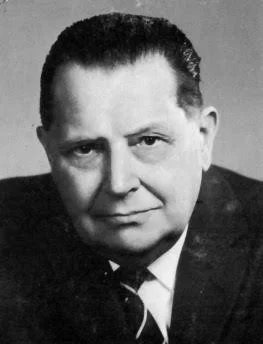
![Black and white portrait of a serious-looking man with slicked-back hair, wearing a dark suit and tie.]()
Ludwig von Bertalanffy
General systems, boundaries, and organized relations; informs Structural Coherence as architecture for stable interpretation across interfaces.
-
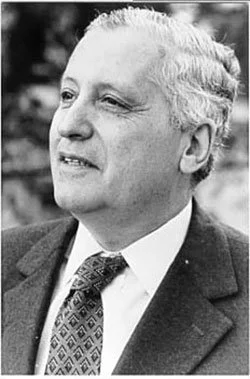
![Black and white photo of a man in a suit and tie, looking to the side outdoors.]()
Ilya Prigogine
Non-equilibrium stability and irreversible dynamics; informs Drift as a rate under throughput and constraint.
-
![Black and white portrait of a woman with short hair and earrings.]()
Lisa Feldman Barrett
Constructed affect and regulation as capacity; informs Affective Regulation as interpretive viability under uncertainty and consequence.
-
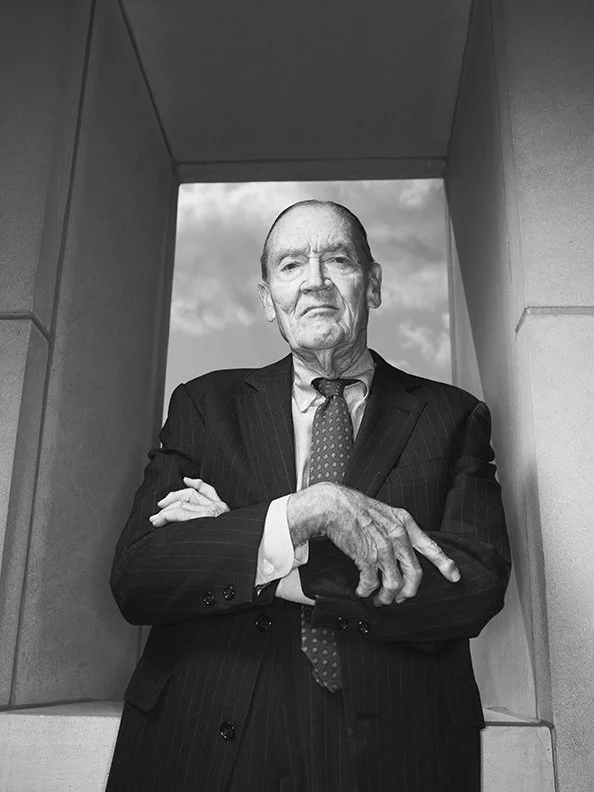
![]()
Jack Bogle
Institutional stewardship and incentive integrity; informs Legitimacy as trustworthiness produced by structure, not rhetoric.
-
![]()
Robert Kegan
Subject object development and complexity capacity; informs interpretive mismatch as a structural limit on what can be held as object.
-
![]()
Miranda Fricker
Epistemic injustice as credibility and interpretability failure; informs reception dynamics via testimonial and hermeneutical failure classes.
-
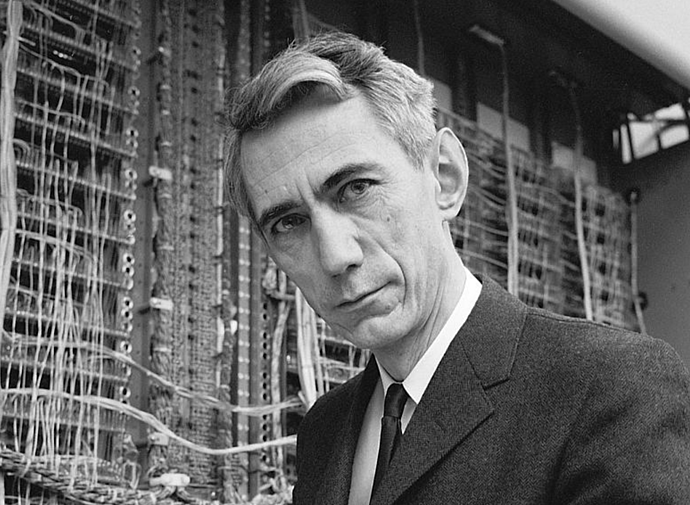
![]()
Claude Shannon
Channel capacity and noise-bounded transmission; informs Signal Alignment as an engineering constraint while bracketing semantics.





A founding statement
on interpretive responsibility and shared reality.
Offered as philosophical context for the Institute's work and distinct from its formal research publications.